
Fresh, crisp, and bursting with Mediterranean flavor, this Authentic Greek Salad (Horiatiki) is the ultimate quick side or light meal. With juicy tomatoes, crunchy cucumbers, briny olives, and creamy feta, it’s a no-cook recipe that’s ready in just 10 minutes.
Table of Contents
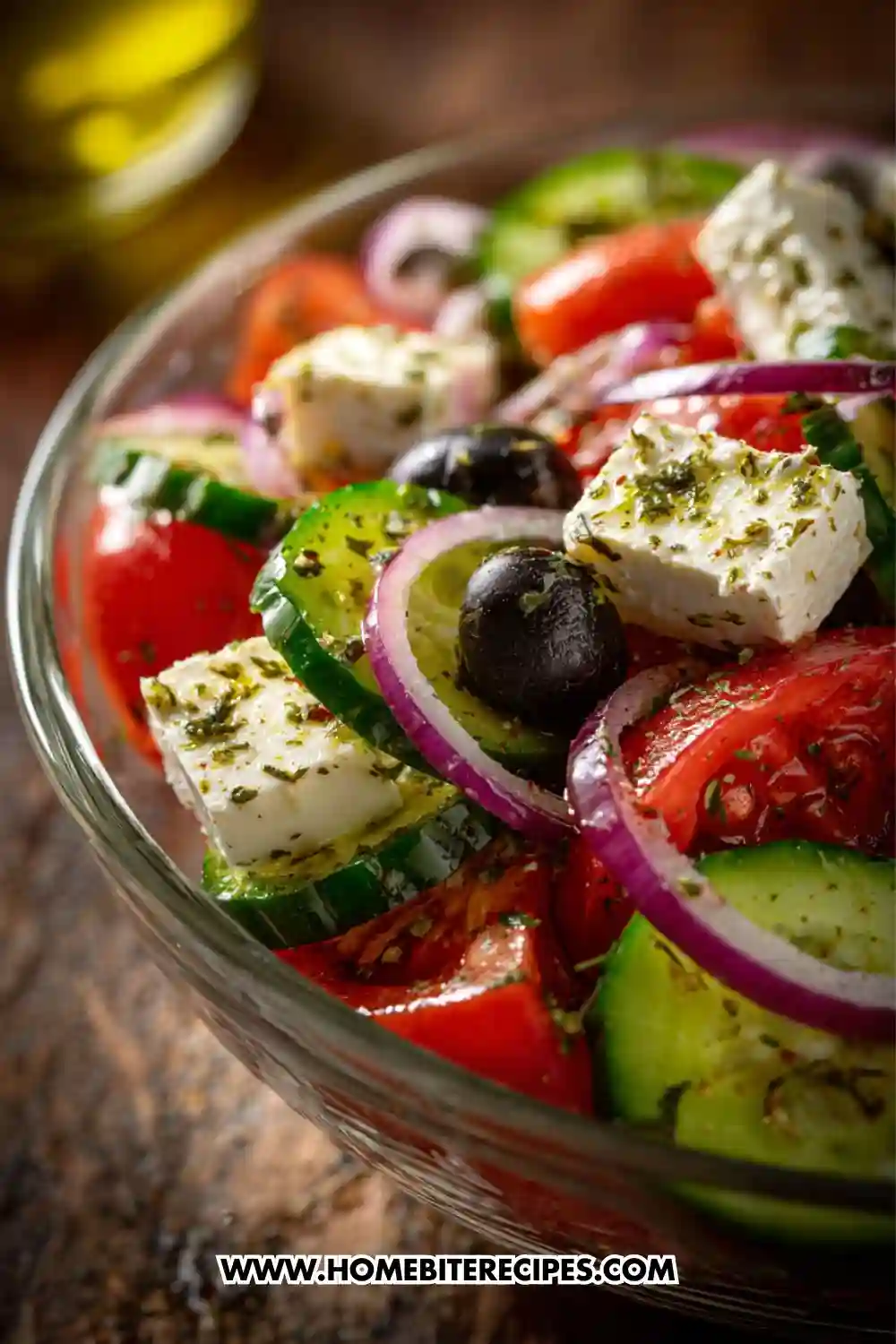
Why You’ll Love This Authentic Greek Salad Recipe
- Quick & easy: Ready in under 10 minutes, perfect for busy days.
- Fresh & crunchy: Every bite is a satisfying mix of textures.
- Healthy & Mediterranean-approved: Packed with vegetables, healthy fats, and naturally low-carb.
- No cooking required: Just chop, toss, and enjoy.
- Versatile & crowd-pleasing: Works as a side, light lunch, or part of a larger Mediterranean spread.
✅ This recipe is suitable For:
- Vegetarian
- Mediterranean diet
- Low-carb / keto
- Gluten-free
- Whole-food diet
- Pescatarian
🚫 This recipe is not suitable For:
- Dairy-free (contains feta)
- Vegan (unless using vegan feta)
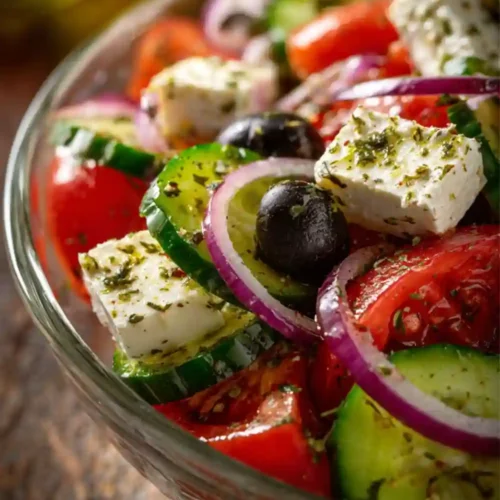
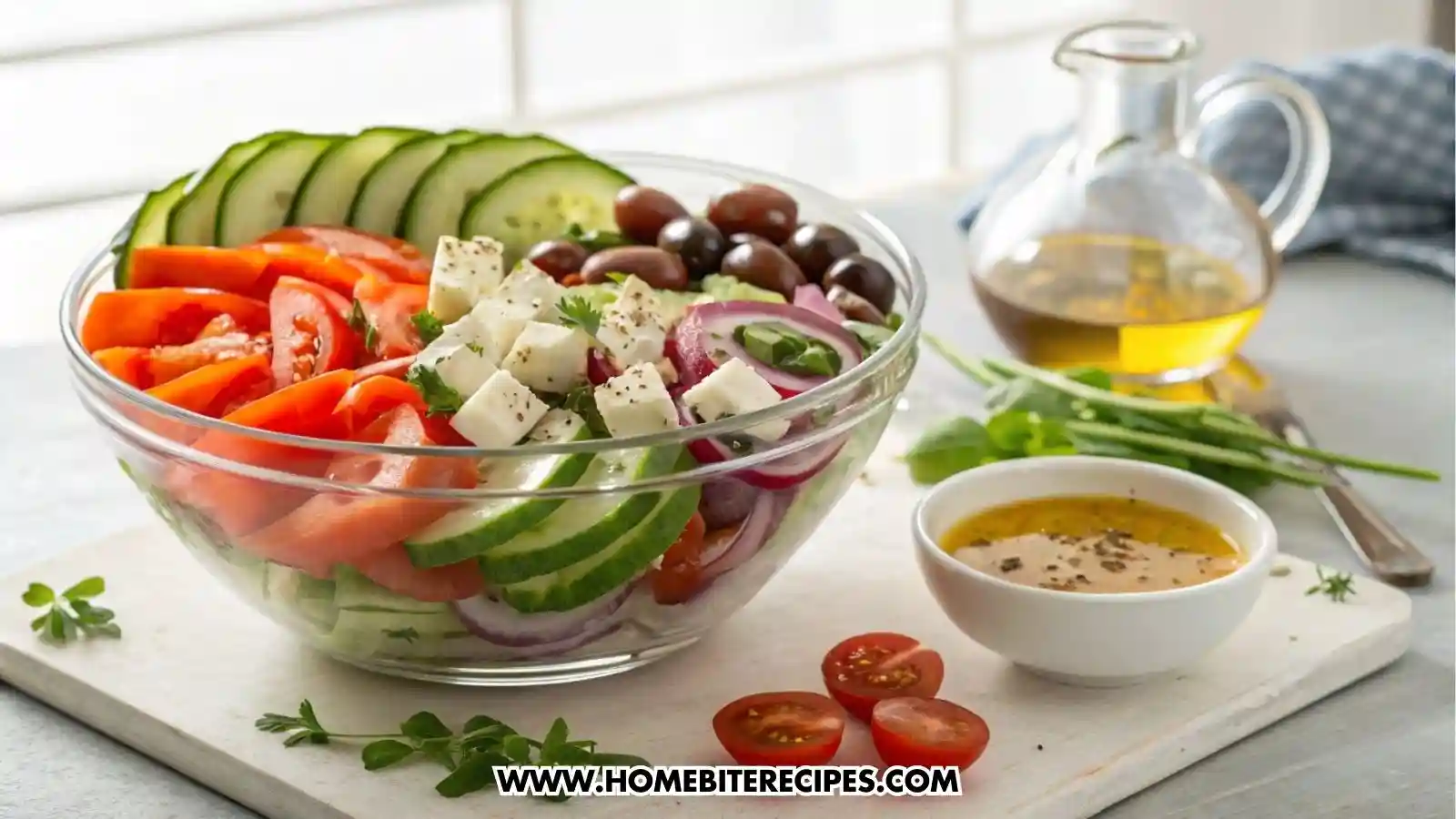
Authentic Greek Salad (Horiatiki) – Fresh, Simple & Ready in 10 Minutes
Ingredients
For the Salad
- 2 cups ripe tomatoes cut into wedges
- 1 large cucumber sliced
- 1/2 red onion thinly sliced
- 1 cup green or black olives Kalamata preferred
- 1 green bell pepper sliced (optional but traditional)
- 6 –8 oz Greek feta cheese cut into cubes or a slab
For the Dressing (Classic Greek Vinaigrette)
- 4 tbsp extra virgin olive oil
- 1 tbsp red wine vinegar
- 1 tsp dried oregano
- Salt & pepper to taste
Instructions
- Prepare the vegetables: Slice tomatoes, cucumbers, onion, and bell pepper and place in a large bowl.
- Add olives & feta: Add olives and top with a slab or cubes of feta cheese.
- Make dressing: In a small bowl, whisk olive oil, red wine vinegar, oregano, salt, and pepper.
- Combine: Pour the dressing over the salad.
- Toss & serve: Gently toss and serve immediately.
Notes
Tips & Variations
- Add capers for a briny boost.
- Use heirloom tomatoes for a sweeter, richer flavor.
- Add avocado for creaminess (optional, not traditional).
- Squeeze in some lemon juice for extra brightness.
- Serve with warm, crusty bread to soak up the dressing.
- Use fresh oregano if available for a more aromatic dressing.
Storage
- Refrigerator: Store up to 2 days.
- Do not freeze.
- Keep dressing separate if storing ahead to prevent soggy vegetables.
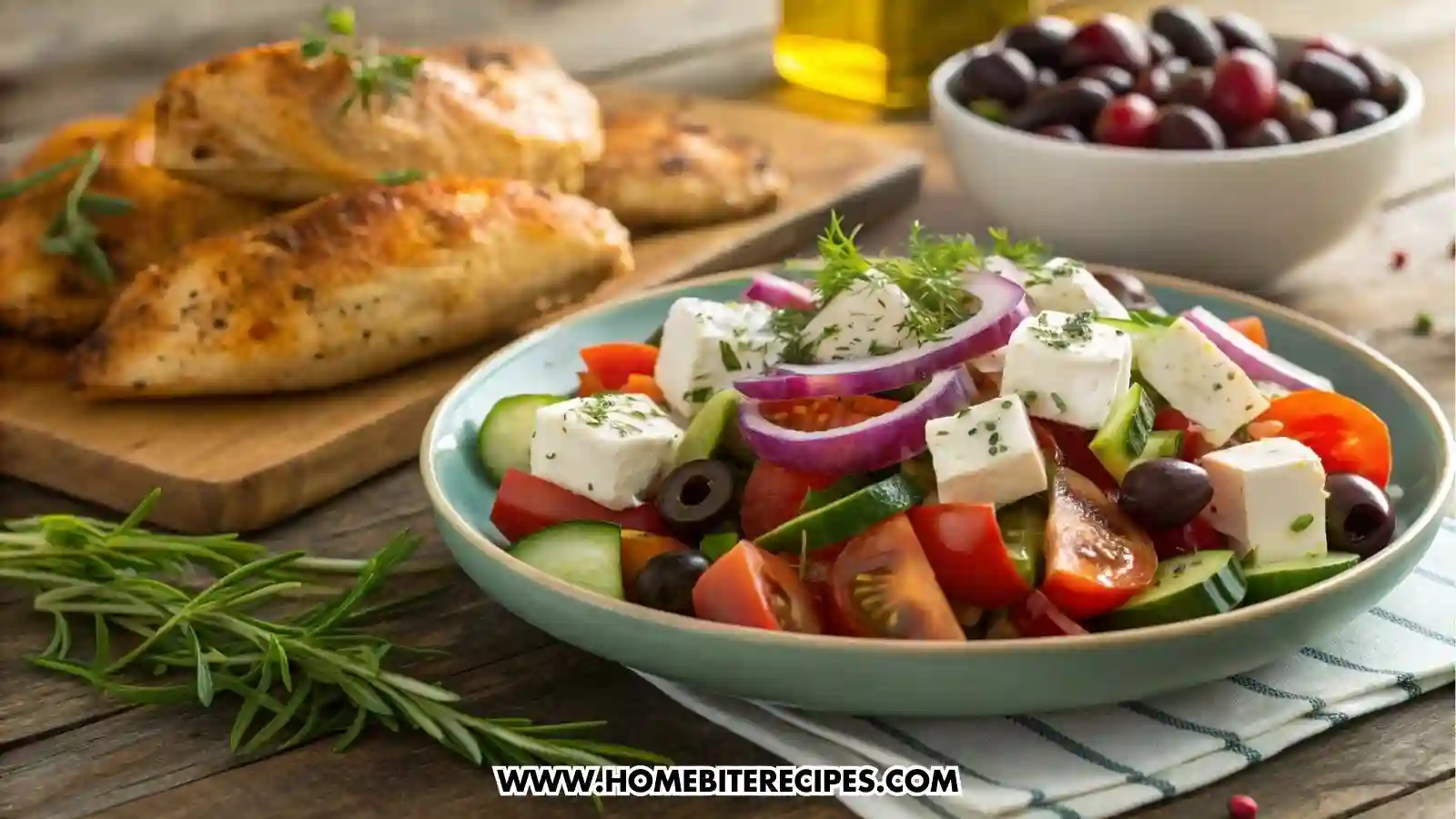
Perfect Pairings: What to Serve with this Authentic Greek Salad
Authentic Greek Salad is incredibly versatile and complements a wide range of main dishes. Start with grilled proteins like chicken breasts marinated in lemon, garlic, and oregano or perfectly seasoned salmon fillets—both offer a warm, flavorful contrast to the crisp, fresh salad.
For a Mediterranean feast, pair this Authentic Greek Salad with lamb kebabs or kofta. The juicy, spiced meat pairs beautifully with the bright, acidic notes of the tomatoes and cucumbers. Add a side of warm pita bread or flatbreads to scoop up the salad and meat for a satisfying bite every time.
Vegetarian options shine too. Serve the Authentic Greek Salad alongside falafel, hummus, or stuffed grape leaves (dolmas) for a protein-rich, satisfying vegetarian meal. Roasted vegetables, like zucchini, eggplant, and bell peppers, complement the salad’s freshness and bring warmth to the table.
For hearty side pairings, rice pilaf or roasted baby potatoes are excellent choices. The mild starch balances the tangy dressing and creamy feta, creating a full, wholesome meal. You can also offer a mezze platter with olives, roasted chickpeas, and marinated artichokes for a colorful, shareable option.
Finally, light soups such as lentil soup or a chilled cucumber-yogurt soup can precede the salad for a complete Mediterranean-style menu. This makes the Greek salad not just a side, but a centerpiece of a vibrant, healthy meal.Greek salad is incredibly versatile and complements a wide range of main dishes. Start with grilled proteins like chicken breasts marinated in lemon, garlic, and oregano or perfectly seasoned salmon fillets—both offer a warm, flavorful contrast to the crisp, fresh salad.
Common Mistakes to Avoid
Using low-quality olive oil: Olive oil is the star of the dressing. Using a bland or poor-quality oil will flatten the salad’s flavor. Always choose extra virgin olive oil.
Over-salting: Both feta and olives contain salt, so taste before adding extra. Over-salting can overpower the vegetables and make the salad too sharp.
Cutting vegetables too small: Traditional Greek salad uses chunky, rustic cuts. Tiny pieces not only look less appealing but also lose the satisfying texture.
Using crumbled feta: Crumbled feta can release water and make the salad soggy. Stick to cubes or a slab for better texture and presentation.
Over-mixing: Toss gently. Rough tossing or stirring breaks tomatoes and cucumbers, resulting in a watery salad.
Adding too many extra ingredients: While extras like avocado or capers are nice, too many additions can overpower the classic flavors. Keep it simple to maintain balance.
Not chilling vegetables: Serving straight-from-fridge vegetables can make the salad crispier and more refreshing.
Ignoring dressing timing: Dress the salad right before serving. Adding dressing too early can make vegetables soggy.
Skipping fresh herbs: Dried oregano works, but fresh oregano or parsley adds brightness and authentic Mediterranean flavor.
Neglecting presentation: Greek salad is visually appealing when layered and arranged thoughtfully. Top feta on the center and arrange vegetables around for a beautiful dish.
FAQ
Q1: Can I make this Authentic Greek Salad ahead of time?
A: Yes, prep the vegetables ahead but add feta and dressing just before serving to keep it fresh.
Q2: Can I use crumbled feta?
A: Cubes or a slab are preferred for texture, but crumbled feta works if necessary.
Q3: Can I substitute olives?
A: Kalamata olives are ideal, but black or green olives are acceptable alternatives.
Q4: Is this Authentic Greek Salad keto-friendly?
A: Yes, it’s naturally low-carb and fits keto and low-carb diets.
Q5: Can I add protein to make the Authentic Greek Salad a main dish?
A: Yes—grilled chicken, shrimp, or chickpeas complement the salad well.
Q6: Can I use different types of vinegar for the dressing?
A: Red wine vinegar is traditional, but white wine or apple cider vinegar can be used in a pinch.
Q7: Can I make this Authentic Greek Salad vegan?
A: Replace feta with a vegan cheese alternative to make it vegan-friendly.
Q8: Can I freeze Greek salad?
A: No, freezing will ruin the texture of the vegetables and feta.
Q9: Can I add fruits like watermelon or grapes?
A: Yes, small amounts of fruits like watermelon or grapes can add sweetness but keep them in moderation.
Q10: How long does it last in the fridge?
A: Up to 2 days if stored properly, with dressing kept separate to prevent sogginess.
This Authentic Greek Salad (Horiatiki) brings the vibrant flavors of the Mediterranean straight to your kitchen—fresh, simple, and ready in minutes. It’s a perfect dish for quick lunches, weeknight dinners, or as a side for any special occasion.
If you love Mediterranean-inspired dishes, you’ll also enjoy my Everyday Quinoa Salad with Cherry Tomatoes, Cucumber & Arugula on HomeBiteRecipes.com—an other healthy salad. Don’t forget to share your version or leave a comment if you’ve tried it!