
This light, fresh, and energizing Mediterranean breakfast plate brings together protein-rich eggs, crisp-tender asparagus, creamy avocado, olives, and vibrant greens for a balanced and satisfying start to the day.
Table of Contents
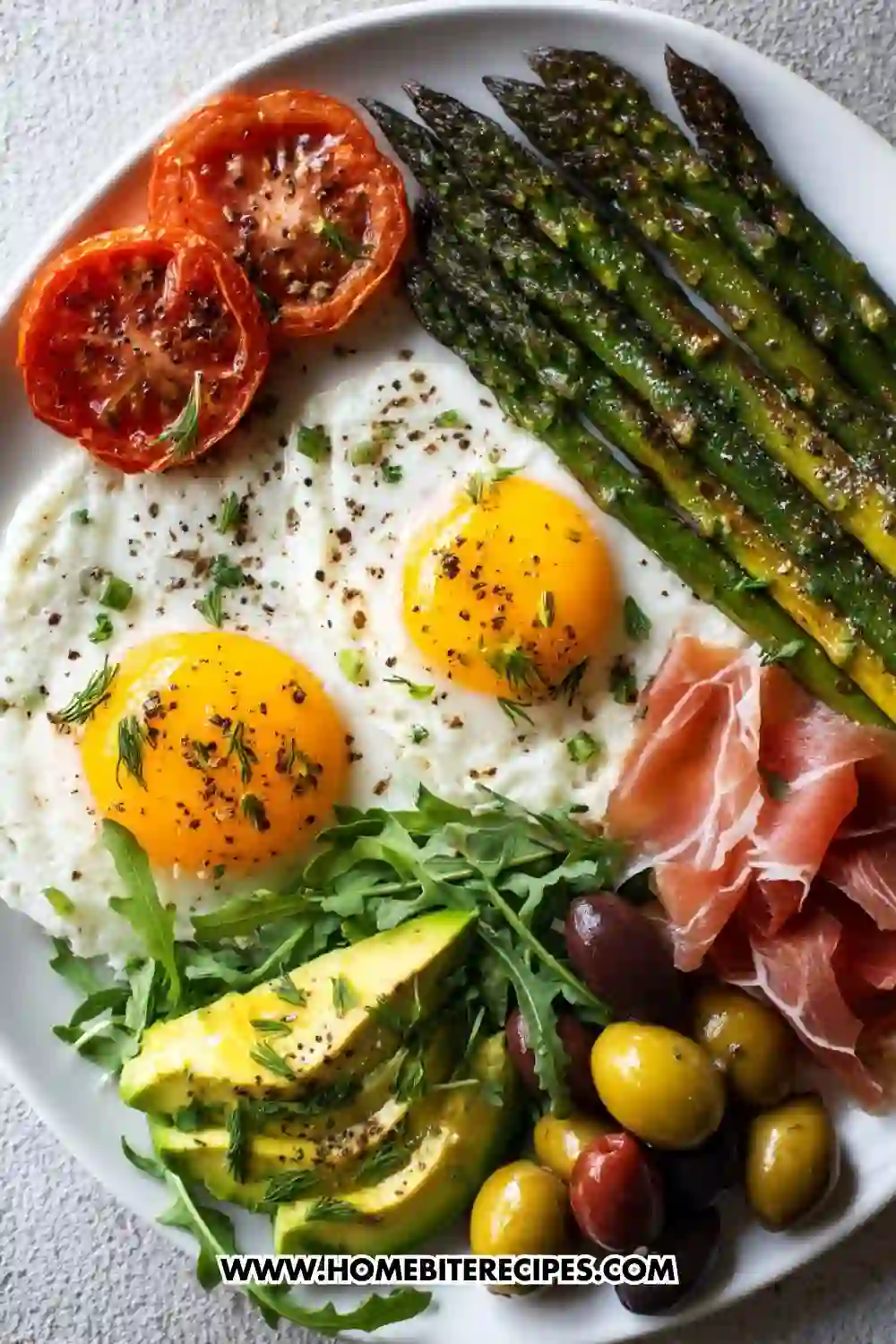
Why You’ll Love This Mediterranean Breakfast Plate
- A balanced, nourishing mix of protein, healthy fats, and fiber
- Ready in under 20 minutes, perfect for busy mornings
- Easily customizable with your favorite vegetables or proteins
- Beautiful presentation worthy of a café-style breakfast
- Energizing and satiating for a strong start to the day
✅ This recipe is suitable For:
- Mediterranean Diet
- Low-Carb
- Gluten-Free
- Keto (adjust vegetable portions as needed)
- Paleo (if using nitrate-free cured meat)
- Whole-Food Diet
- High-Protein Diet
🚫 This recipe is not suitable For:
- Vegan
- Vegetarian (unless replacing the ham)
- Dairy-Free only if cheese is added
- Low-Fat Diet due to eggs, avocado, and olives
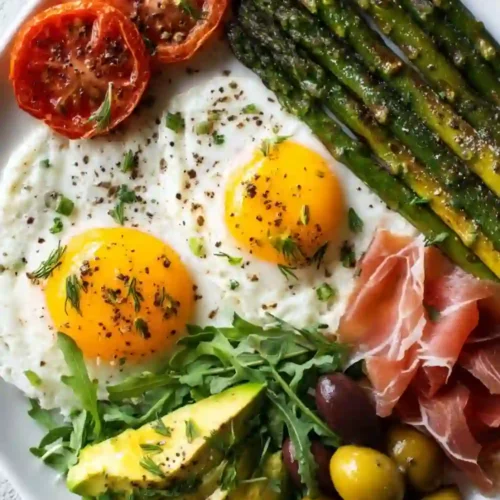
Mediterranean Breakfast Plate with Eggs, Asparagus & Avocado
Ingredients
- 2 large eggs
- 6 –8 asparagus spears trimmed
- 2 small tomatoes halved
- ½ avocado sliced
- 1 handful fresh arugula
- 6 –8 mixed olives green + kalamata
- 2 –3 slices prosciutto or cured ham
- 1 tbsp olive oil divided
- Pinch of salt and black pepper
- Fresh herbs optional: dill, parsley, or basil
Instructions
Roast the asparagus and tomatoes:
- Heat a skillet over medium-high heat and add ½ tablespoon of olive oil.
- Add the asparagus and tomato halves. Season with salt and pepper. Cook 4–5 minutes until lightly charred.
Cook the eggs:
- In the same pan (or a separate one), add the remaining oil.
- Crack in the eggs and cook sunny-side up until whites are set but yolks remain runny.
Assemble the plate:
- Add arugula, tomatoes, asparagus, olives, and avocado to a serving plate.
- Place the sunny-side eggs on top.
- Add thin slices of prosciutto.
- Season with pepper and fresh herbs.
- Serve immediately.
Notes
Tips
- Keep the yolks runny for added richness.
- Char the asparagus to deepen the flavor.
- Finish with a drizzle of high-quality olive oil for an authentic touch.
Variations
- Add cheese: feta, mozzarella, or goat cheese.
- Swap proteins: smoked salmon, turkey slices, chicken, or hard-boiled eggs.
- Veggie swaps: spinach, roasted peppers, mushrooms, or cucumber.
- For extra flavor: add chili flakes, za’atar, or sumac.
Storage
- Best enjoyed fresh due to the eggs and avocado.
- Asparagus, tomatoes, olives, and arugula can be prepped 1 day ahead.
- Store cooked vegetables separately for best texture.
- Cook eggs fresh each morning for optimal taste.
Perfect Pairings: What to Serve with this Mediterranean breakfast plate
A wholesome Mediterranean breakfast plate pairs beautifully with light, fresh sides that complement the eggs and vegetables without overpowering them. One excellent option is a simple mixed greens salad dressed with olive oil, lemon, and a sprinkle of herbs. The brightness of the salad enhances the flavors of the asparagus, tomatoes, and arugula already on the plate, creating a refreshing balance.
Another wonderful accompaniment is a small bowl of Greek yogurt topped with fresh fruit or a drizzle of honey. The cool creaminess of the yogurt contrasts perfectly with warm eggs and roasted vegetables, adding a creamy texture while keeping the meal balanced and nourishing. If you prefer savory additions, plain yogurt mixed with cucumber and herbs also works well.
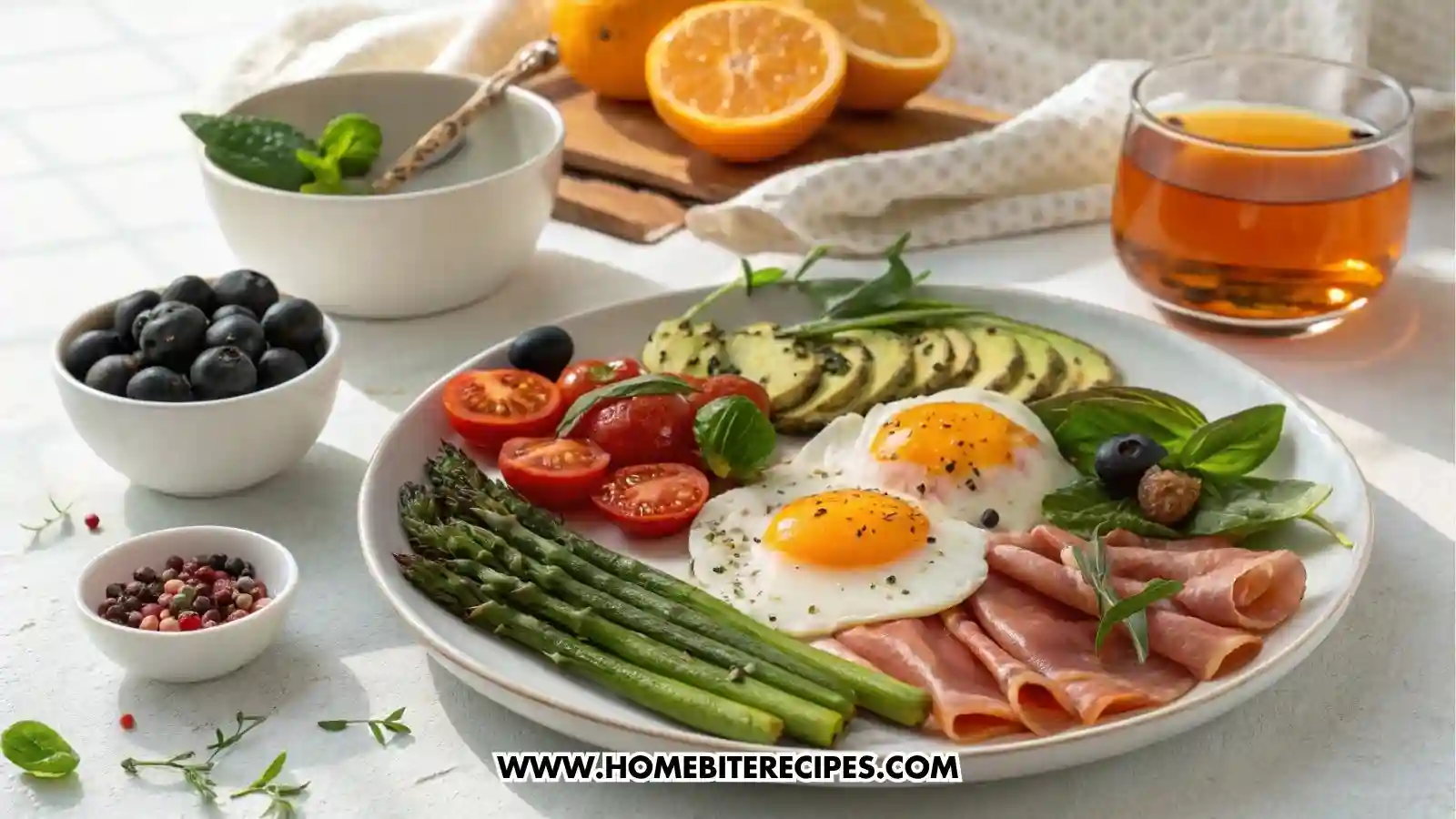
Fresh fruit is always a great pairing with Mediterranean breakfasts. A bowl of seasonal fruit—such as berries, melon, oranges, or figs—adds natural sweetness and vibrant color to the meal. This also provides extra hydration and fiber, rounding out the plate with something light and refreshing. Fruit cuts through the richness of avocado and eggs, making the meal feel complete and well balanced.
For something warm to drink, complement the Mediterranean breakfast plate with a cup of herbal tea or black coffee. Choose mint or chamomile tea for something soothing, or opt for a simple unsweetened coffee to keep the breakfast clean and energizing. These beverages pair harmoniously with the fresh, whole-food flavors of the dish, helping create a satisfying and well-rounded morning routine—all without relying on ingredients outside permissible dietary guidelines.
Common Mistakes to Avoid
1. Overcooking the eggs
It’s easy to leave the eggs on the heat a bit too long, but doing so turns the yolks firm and dry instead of soft and runny. A runny yolk adds richness, blends beautifully with the vegetables, and keeps the plate balanced. Cook the eggs just until the whites are set, then remove them immediately from the pan.
2. Crowding the skillet
Adding too many vegetables at once prevents proper caramelization. Instead of developing a light char and sweetness, the asparagus and tomatoes will steam and become soft or watery. Give everything space in the pan so it can sear, color, and hold its structure on the plate.
3. Using underripe avocado
A firm, underripe avocado lacks creaminess and will taste flat compared to the other fresh components. It also won’t slice smoothly, making it difficult to plate. Choose an avocado that yields slightly to pressure and has a buttery texture when sliced.
4. Not preheating the pan
Starting the vegetables in a lukewarm pan results in uneven cooking and little to no browning. A properly heated pan ensures the asparagus and tomatoes char quickly, helping them stay crisp-tender and flavorful. Always let the pan heat fully before adding oil or vegetables.
5. Skipping seasoning or using too little
Salt and pepper may seem basic, but they are what bring out the natural sweetness of the tomatoes, the freshness of the arugula, and the richness of the eggs. Under-seasoning can make the entire dish taste muted. Season each component lightly to build balanced flavor.
6. Letting the vegetables overcook
Asparagus cooks quickly, and leaving it on the heat for even a minute too long can make it mushy or stringy. Overcooked tomatoes can also lose their shape and release too much moisture. Watch the skillet closely to keep the vegetables crisp and vibrant.
7. Using low-quality or old olive oil
Olive oil is a main flavor component here, so using one that tastes bitter, stale, or overly processed can affect the entire dish. Choose a fresh, aromatic olive oil and add a drizzle at the end if you want more Mediterranean depth.
8. Allowing the plate to cool before serving
This Mediterranean breakfast plate shines when served warm, with contrast between the hot eggs and vegetables and the cool avocado and greens. Letting the plate sit too long makes everything lose its texture and appeal. Assemble and serve immediately for the best results.
FAQ
1. Can I make this Mediterranean breakfast plate ahead of time?
Partially. Prep the veggies and olives ahead, but cook the eggs and slice the avocado fresh for the best texture.
2. Can I use a different protein or skip the ham?
Yes. Try smoked salmon, turkey slices, chicken breast, or simply leave out the meat and add feta or chickpeas.
3. Can I cook the eggs differently?
Absolutely. Poached, soft-boiled, over-easy, or over-medium all work beautifully.
4. What can I use instead of asparagus?
Spinach, kale, roasted zucchini, bell peppers, or sautéed mushrooms are excellent alternatives.
5. Is this Mediterranean breakfast plate good for weight loss?
Yes. It’s high in protein, nutrient-dense, and low in refined carbs, which helps keep you full longer.
6. Is this Mediterranean breakfast plate naturally gluten-free?
Yes. The entire plate is naturally gluten-free as written.
7. Can I make this Mediterranean breakfast plate dairy-free?
Yes. It’s dairy-free unless you decide to add cheese.
8. Can I roast the vegetables instead of using a skillet?
Yes. Roast at 425°F (220°C) for 10–12 minutes.
9. How can I keep the avocado from browning?
Drizzle with lemon or lime juice if prepping slightly ahead.
10. What types of olives work best?
Green olives, kalamata, and Castelvetrano olives add the best flavor contrast.
This Mediterranean breakfast plate is a fresh, wholesome way to start the morning with color, balance, and bold flavor. It’s easy to customize, quick to prepare, and satisfying in all the right ways. If you enjoy nourishing breakfast recipes like this one, be sure to try my Smoked Salmon Toast with Whipped Cream Cheese – Easy & Elegant Breakfast or Brunch Recipe. And don’t forget to leave a comment or share your experience if you make this Mediterranean breakfast plate —I’d love to hear how it turned out for you.